

Introduction
LASCAVIA MUSEA (free demo) puts you in charge of a compact, character-driven museum mystery where observation and deduction are the main tools. This free demo of LASCAVIA MUSEA (free demo) introduces the atmosphere, core puzzle systems, and the voice of its eccentric family at the center of the story—an absent, larger-than-life uncle whose secrets you'll gradually uncover while managing the galleries and exhibits. The description below outlines what to expect from the demo build and how its mechanics and presentation hint at the fuller experience in early access.
Key Features
The demo emphasizes thoughtful exploration over fast action, offering several interconnected rooms to investigate and a narrative approach that privileges conversation, context, and environmental storytelling. You will read exhibit labels, inspect artifacts, and follow leads left in notes and recorded dialogue. Puzzles blend pattern recognition, inventory use, and contextual decoding: a textile pattern might suggest a code, a misplaced object can change a room’s state, and snippets of conversation can reveal a new angle to pursue. The free demo is designed to be representative rather than comprehensive, highlighting the kinds of discoveries and slow-burn reveals that characterize the full game.
Gameplay Mechanics
Gameplay in LASCAVIA MUSEA (free demo) centers on lateral thinking and close inspection. The demo uses a lightweight journal and note-taking system that records clues, observations, and character statements so you can follow multiple threads without external tools. Puzzles are layered: solving an environmental riddle may unlock a mechanism in a different gallery, and some solutions require synthesizing information gathered across several visits. There are no combat encounters; the challenge comes from piecing together narrative facts, inferring motives, and unlocking access through careful reasoning rather than reflexes or timed trials.
Controls and Progression
Controls are optimized for touch devices with simple gestures—tap to examine, drag to manipulate objects, pinch to zoom on detailed items, and context-sensitive buttons to interact with characters or puzzle elements. The demo follows a chapter-like progression with clearly defined short-term goals that feed into longer narrative objectives, so each session feels focused. As you complete sequences you open new rooms or reveal optional side paths; the journal updates automatically to log newly discovered evidence and suggested follow-ups. Progression is driven by unlocking narrative beats and environmental access rather than experience points or leveling systems.
Visual Style and Level Structure
The museum presents a layered aesthetic that mixes ornate, classical interiors with subtle contemporary touches to support the story’s tone. Lighting, material detail, and sound design are used deliberately to guide attention: shadows and reflections may conceal clues, while exhibit text and small props provide contextual hints. Levels are organized as connected galleries and back rooms rather than isolated puzzle boxes, encouraging backtracking and cross-room problem solving. The demo showcases a handful of these interconnected spaces so you can see how atmosphere and puzzle design interact to support investigation.
Customization, Replay Value and Challenge Systems
While the demo does not focus on avatar customization, it offers replay value through multiple approaches to solving puzzles and optional discoveries that are easy to miss on a first pass. Challenge is tuned around information depth and inference: some puzzles have layered solutions that reward different investigative styles, from methodical note comparison to intuitive leaps based on character dialogue. The branching reveals and optional clues encourage revisiting areas, and the full release aims to expand these branches and add more optional content for players who enjoy exploration and narrative nuance.
User Experience, Accessibility and Offline Play
The interface prioritizes readability and minimal friction: adjustable text sizes, clean fonts, and paced dialogue help players absorb story details. Accessibility options in the demo include control sensitivity adjustments, an optional hint system that nudges you toward the next objective without giving away full solutions, and audio cues that reinforce visual hints. After initial installation the demo can be played offline, making it suitable for short sessions or play on the go; local save and journal syncing keep progress intact without a constant connection.
Version Information and Availability
The pre-sale build and LASCAVIA MUSEA (free demo) are available now in early access for players who want to sample the opening chapters and core systems before committing. Support options include a pre-sale purchase or subscription tiers that provide early previews of upcoming content, but the demo remains standalone and commitment-free. Regular updates are planned to refine puzzle balance, expand accessibility settings, and broaden narrative branches based on player feedback as development continues.
- No virus
- No advertising
- User protection
Information
- File size: 45.62 M
- Language: English
- Latest Version: 1.0
- Requirements: Android
- Votes: 153
- Package ID: itchio_lascavia-musea-free-demo
- Developer: lascavia
Screenshots

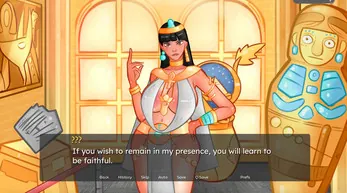



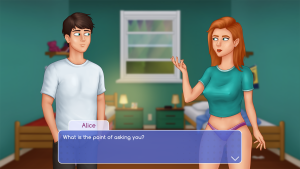












Explore More
Are you searching for an enjoyable method to strengthen your intellect? Our hottest logical puzzle is tailor-made to offer a stress-free pastime experience. With beautiful graphics and chill background music, you can immerse yourself in an engaging world of logic and critical thinking. Solve increasingly tricky levels at your own pace, with no time pressure or lives system.
View more