

Introduction
Mark of Prey is a branching-path visual novel game that places you in the shoes of Felix, a sound engineering student drawn into the volatile life of an up-and-coming metal band. This editor introduction describes the game experience, structure, and systems so you know what to expect before downloading. Mark of Prey focuses on choice-driven storytelling, character relationships, and a music-centered atmosphere while offering settings that let players tailor content and presentation to their preferences.
Gameplay and mechanics
Gameplay in Mark of Prey is built around narrative decisions rather than reflex-based tasks: each chapter presents scenes where dialogue choices, performance-related decisions, and backstage actions influence how characters react and which story routes open. Choices operate as persistent flags that accumulate across chapters, so early decisions can ripple forward and create meaningful divergence later. There is no combat or traditional game leveling; the challenge comes from navigating relationships, interpreting character motivations, and making decisions that unlock different endings, cutscenes, and epilogues.
Controls and mobile interaction
The interface is optimized for touch devices with simple and intuitive controls: tap to advance text, tap choice options to select them, and swipe through image galleries and menus. Mark of Prey includes a backlog to review recent dialogue, an auto-advance mode for hands-free reading, and a skip function to move quickly through previously read passages. Visual cues on decision screens help indicate when an option will change a character disposition or open a new narrative branch, supporting informed choices without interrupting immersion.
Progression, chapter structure, and saves
Progress is organized into compact chapters that make it easy to play in short sessions. A visible progress marker shows how far a route has progressed and highlights branches that remain unexplored. The save system supports multiple manual save slots and quick-save bookmarks at key decision points so you can return directly to pivotal moments without replaying long stretches. Route completion tracking helps you see which endings and scenes you have yet to unlock, encouraging replay while keeping completion goals clear and achievable.
Replay value and narrative depth
Replayability is a core design goal: each band member route reveals distinct perspectives and previously unseen scenes. Small choices can cascade into large emotional consequences, making subsequent playthroughs feel fresh as you explore alternate outcomes and character dynamics. The branching structure rewards exploration by unlocking unique cutscenes and epilogues tied to specific relationship states, giving players a clear payoff for choosing different paths over multiple sessions.
Visual style, art, and audio design
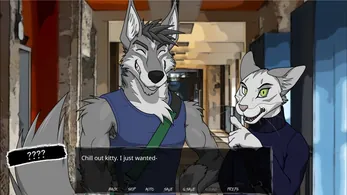
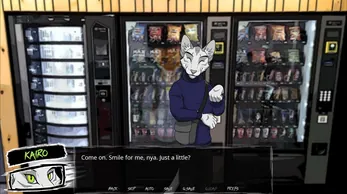
The visual presentation leans into a gritty, music-focused aesthetic with character portraits and scene art by Fox (Footpaws) that reflect each band member’s personality and the atmosphere of practice rooms, clubs, and recording sessions. Background art, layered sprites, and transitional effects are used to heighten emotional beats while keeping attention on the dialogue. An original soundtrack supports the mood across tense rehearsals and quieter character moments, with separate volume controls to balance music and sound effects according to personal preference.
Customization and user experience
Settings offer practical options for tailoring the experience: a SFW toggle lets players hide optional explicit or mature scenes, adjustable text speed and font size improve readability, and UI options such as larger tap targets enhance comfort on smaller screens. The interface prioritizes accessibility of important controls during scenes and returns players to the last decision point after a crash, reducing frustration when experimenting with alternate branches. These quality-of-life touches make the visual novel approachable for both casual readers and dedicated route hunters.
Accessibility, offline play, and performance
Mark of Prey supports offline play after installation, so you can read routes and replay chapters without a persistent internet connection. Accessibility considerations include adjustable text size, contrast-aware dialogue boxes, and clear visual markers for decision points. Assets are compressed with an emphasis on balancing visual fidelity and loading speed, and background loading minimizes interruptions between scenes to keep reading flow smooth on a wide range of Android devices.
Content guidance and developer notes
The game contains mature themes such as strong language and references to substance use, and it offers optional NSFW content that can be disabled through the SFW setting for a milder experience. Mark of Prey was developed by an indie team—Mango Birb (writing and programming) and Fox (Footpaws) (art and music)—and their collaboration aims to deliver a cohesive narrative voice and a music-driven world. If you appreciate branching stories with character-focused drama and a soundtrack-informed atmosphere, Mark of Prey provides a replayable visual novel experience with clear controls, meaningful progression, and settings that let you tailor the content to your tastes.
- No virus
- No advertising
- User protection
Information
- File size: 195.20 M
- Language: English
- Latest Version: 0.0.1
- Requirements: Android
- Votes: 491
- Package ID: com.markofprey.program
- Developer: mango-birb
Screenshots














Explore More
Looking for some quick gaming fun? Our new super-casual game is perfect for entertaining bursts in your busy day. With simple, intuitive gameplay crossed with challenges that engage your brain, you'll keep coming back again and again. No complex controls or tutorials - just open and play anywhere, anytime. Vibrant art style and upbeat music create a lighthearted experience.

Indigo Lane

Scissors Simulator

Buddies Spicy

Word Blitz - Word Search Game

Casino Games - Infinity Slots

Crazy Cooking Pizza Maker Game

ACEplus

Heart City Stories Episode 2: Office Rivals