

Introduction
After is an adult-oriented narrative game from Marumaru Factory Games that places players in a near-future academic setting where creative works are preserved as cultural heritage. In this story-driven title you step into the role of an instructor at an institute whose enrollment and activities are explicitly restricted to consenting adults, and the plot revolves around a controversial after-school practical program that probes interpersonal dynamics, ethics, and personal boundaries. The game emphasizes dialogue, character development, and branching choices rather than action, offering a mature, reflective experience for players who prefer character study and narrative consequences.
Key Features
The branching narrative engine in After responds to player choices with visible consequences: dialogue options, situational responses, and moral decisions shape how characters relate to one another and which story paths become available. Scenes are structured into chapters and self-contained episodes that can be replayed to explore alternate outcomes. The central program in the setting functions as a narrative device to examine themes of consent, power, and cultural preservation without explicit description of acts, keeping the focus on character motivation and emotional stakes.
After is built as a single-player visual novel experience with an emphasis on scripted encounters and character-specific arcs. Players unlock new scenes and character routes by making different choices, reaching specific decision thresholds, or revisiting chapters with knowledge gained from earlier playthroughs. The game includes a gallery system where completed scenes and illustrations are recorded, rewarding exploration and multiple runs.
Gameplay and Mechanics
Gameplay in After centers on conversation and choice. Progression is driven by dialogue trees and event flags rather than combat or timed reflexes. Each major decision updates relationship meters and internal story flags that influence subsequent interactions, opening unique scenes or closing off alternate branches. The pacing is deliberate: some choices produce immediate changes in the current scene while others have delayed consequences that emerge later in a chapter-based structure.
Controls are simple and optimized for touch devices: tap to advance text, swipe to skip read text, and use an on-screen menu to access save/load slots, the gallery, and settings. The auto-forward and text-log functions allow players to follow long conversations hands-free or to review previous lines. A straightforward save system supports multiple manual save slots and quick-save for convenience between scenes.
Progression and Replay Value
Progression is nonlinear and designed for replay. Major narrative forks lead to multiple endings, and hidden conditions unlock additional scenes. Players who wish to explore every route will find clear checkpoints to return to, and the gallery and flag systems make it easy to track which content remains undiscovered. Because the game focuses on interpersonal drama, different choices reveal new layers of character backstory and ideological conflict, offering significant replay value for those interested in narrative depth.
Visual Style and Presentation
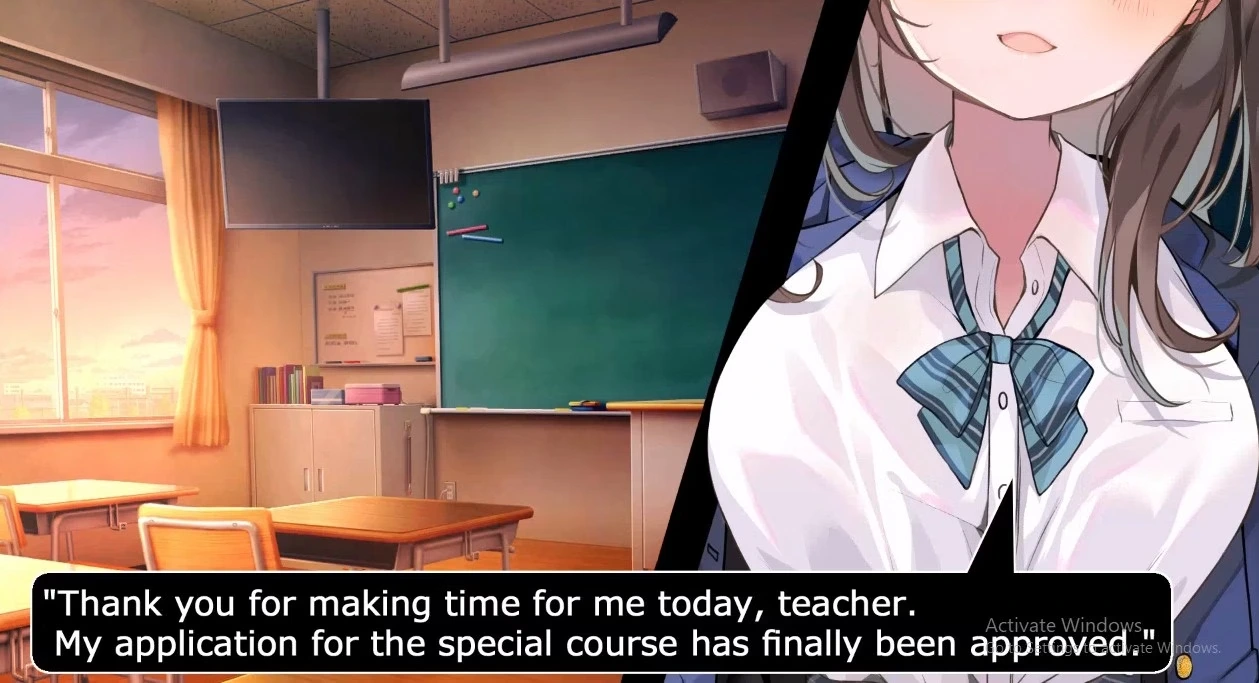
After features stylized character art and scene illustrations that create a consistent near-future atmosphere. Backgrounds reflect the institutional setting, and character portraits shift with emotional beats to help convey tone and subtext. The UI is minimal so that writing and artwork remain central to the experience, and cutscenes or full-screen illustrations are used sparingly to highlight pivotal moments without overwhelming the storytelling flow.
Accessibility and User Experience
The game includes adjustable text speed, toggles for auto-forward, and font size options to improve readability. An audio slider separates background music and sound effects, allowing players to tailor the soundscape to their preference. All content is available offline after installation, making After suitable for play without a persistent internet connection. The interface is optimized for one-handed mobile use and supports common accessibility needs such as larger text and clear contrast in the UI.
Challenge Systems and Tone
Rather than traditional difficulty levels, After’s challenge comes from managing relationships and navigating ethical dilemmas; some decisions have no clearly 'right' answer and are intended to provoke reflection. A reputation-style system tracks how other characters perceive the player’s choices, which can restrict or enable certain narrative opportunities and affect the final outcomes. The tone of the game is mature and contemplative, and while it addresses adult themes, it avoids explicit depiction or eroticization, focusing instead on emotional and moral complexity.
Developer and Version
After is developed and published by Marumaru Factory Games and is presented as a single-player, mature-rated narrative experience. The version listed is 1.00, representing the initial public release. Players should be aware that the game contains mature themes appropriate only for adult audiences and that all characters are portrayed as adults in the fictional setting. This release prioritizes story depth, branching structure, and replayability for players interested in thoughtful visual-novel experiences.
- No virus
- No advertising
- User protection
Information
- File size: 112.00 M
- Language: English
- Latest Version: 1.00
- Requirements: Android
- Votes: 484
- Package ID: com.game.after
- Developer: Marumaru Factory
Screenshots


















Explore More
Experience nonstop thrills with our newest edge-of-your-seat action game! With console-quality graphics and intuitive touchscreen controls, you'll be drawn into high-octane combat and stunt-driven gameplay. Choose from an arsenal of upgradable weapons and vehicles to blaze through enemy bases, post-apocalyptic cities, and more. Physics-based action packed with explosions and destructible environments make every level more intense than the last.

Bloody Painter Dating Sim

NEON STRIP

Burger Simulator

Lust of NTR

SpongeBob: Sponge on the Run

Re:Witch

Neet and Angel

Scary Baboon VR