

Introduction
Paranormal Practice is a single-player, sandbox-style adult visual novel that places the player in a liminal version of Purgatory where choice, relationships, and exploration determine the narrative path. Designed for mature players who prefer character-driven storytelling, Paranormal Practice combines scene-based episodes with an open layer of navigation so your decisions change who you meet, what problems you can solve, and which endings become available.
Key features
The core appeal of Paranormal Practice is emergent storytelling: NPCs have needs, grudges, and routines that react to your actions rather than following a strictly linear script. Interactions update an internal world state so scenes unlock or close off depending on prior choices and timing. Adult themes are treated as part of character development and relationship mechanics rather than gratuitous content; the app provides in-game content warnings for sensitive material and focuses on emotional and moral consequences. Early-access builds already show a solid objective loop: find lost souls, earn rapport with key characters, and pursue options that move you toward an ascension endpoint.
Gameplay mechanics
Gameplay blends branching dialogue, node-based exploration, and outcome-driven decision points. Conversations use multiple response options that influence affinity meters, open new scene branches, and sometimes create or resolve conflicts between NPCs. Exploration is handled through a map-like interface of locations and event nodes rather than free-roaming 3D movement; selecting a location presents a set of possible encounters and scenes. Rescue tasks typically appear as multi-step narrative sequences that require choosing the right dialogue approach, meeting small conditions, or prioritizing which wayward souls to aid first. There is no multiplayer component: the experience is intentionally single-player and narrative-focused.
Controls and user interface
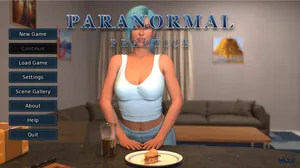
The interface is designed for touch devices and tablets: tap to advance text, tap choices to select dialogue, and open an on-screen menu to check objectives, character profiles, and save slots. Desktop and emulated play use equivalent inputs such as mouse clicks and common keyboard shortcuts for advancing text and toggling interface elements. Menus are deliberately minimal and unobtrusive so scenes remain the focal point; a scene history and character log help you review prior conversations and the motivations that shaped current relationships.
Progression, challenge and systems
Progress is measured by which souls you rescue, the strength and status of your relationships with central characters, and the cumulative consequences of your decisions. The experience emphasizes risk versus reward: pursuing one character or objective may close off another opportunity, and some rescues require careful timing. Challenge comes from limited scene opportunities and branching consequences rather than combat difficulty; players must weigh moral dilemmas, manage a schedule of encounters, and learn NPC tendencies to reach preferred outcomes. Multiple endings reflect major relationship states and the number of souls saved, encouraging thoughtful choices across playthroughs.
Visual style, presentation and customization
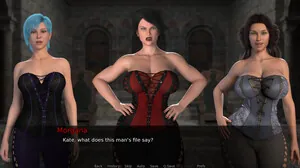
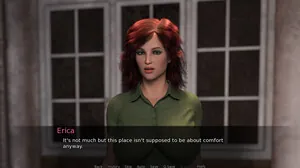
Visually, Paranormal Practice uses character portraits, illustrated backgrounds, and a restrained UI palette to support an atmospheric, slightly moody presentation. Animations are subtle and emphasize facial expression shifts and scene transitions to maintain readability and pacing. Customization is focused on narrative impact: you can set a player name and select initial dialogue tones that influence the way NPCs respond early on, while character profiles track relationship history so you can review how past choices shaped current dynamics. Typography and layout are tuned for comfortable reading on small screens.
Level structure, replay value and user experience
The level structure is flexible: the world is organized into locations and event nodes that present scene-based episodes, not fixed chapters. Because choices affect which nodes become available, replaying the game reveals different conversational branches and previously hidden storylines when you shift priorities or try alternative approaches. The sandbox layer encourages experimentation: small decisions ripple into larger consequences, and returning players can focus on different characters or rescue strategies to see how outcomes vary. The user experience emphasizes reading flow, clear navigation, and the ability to experiment without penalty thanks to standard save/load slots.
Accessibility, offline play and performance notes
Accessibility features include adjustable text size, an auto-advance option for read-along pacing, and skip-unseen to move faster through content you have already seen. Paranormal Practice is a single-player, offline experience that does not require a persistent network connection and stores saves locally. Performance is optimized for modest hardware; as an early release (v0.1.0) players may encounter limited content or rough edges that the developer will refine. The team actively collects player feedback to prioritize expansions and polish in future updates.
- No virus
- No advertising
- User protection
Information
- File size: 106.56 M
- Language: English
- Latest Version: 0.1.0
- Requirements: Android
- Votes: 246
- Package ID: paranormalpractice_androidmo.im
- Developer: Just1Guy
Screenshots
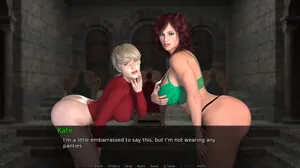



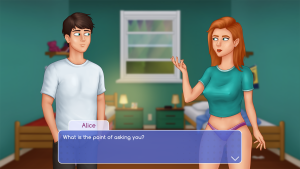










Explore More
Gather around for game night anytime, anywhere with our new mobile board game. Play digital versions of classics like chess, checkers, backgammon and more against friends or AI opponents. With smooth online multiplayer, you can challenge players worldwide or create private games. Customizable boards, pieces, and house rules allow you to tailor the experience. Compete in daily tournaments or just play for fun.
View more