


Introduction
The Palindrome places you in short, action-driven hide-and-seek matches where one team hunts and the other tries to survive under a ticking clock. The Palindrome pairs asymmetric roles — Hider and Seeker — so each round emphasizes different objectives and behaviors: Seekers close distance and corral opponents, while Hiders use the environment and role-specific skills to remain undetected until time runs out. This description outlines core mechanics, controls, progression, visual and level design, and the ways the game encourages repeated play without overpromising features.
Gameplay mechanics
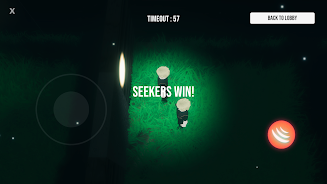
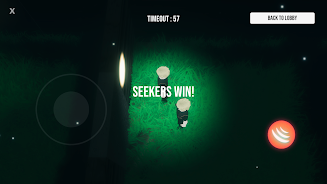
At its core, The Palindrome is about moment-to-moment decision making in compact rounds. Hiders focus on stealth, misdirection and positioning; Seekers pressure, track movement and coordinate captures. A distinctive mechanic converts captured Hiders into part of the Seeker force, changing the balance as a match progresses. Timed rounds create urgency and reward both cautious play and aggressive gambits. Matches are designed to produce short, energetic sessions where small tactical choices — when to use a skill, when to disengage — can swing the outcome.
Controls and input
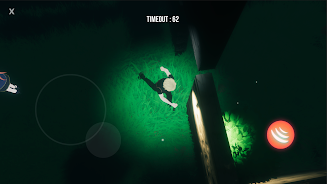
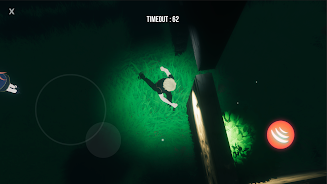
The control scheme emphasizes accessibility and responsiveness so players can learn quickly while still expressing skillful play. Typical input includes an intuitive movement control, a dedicated action button for role skills, and a context-sensitive interact command for environmental uses such as hiding spots or temporary obstacles. Controls are mapped to common touchscreen conventions and are described in an in-game tutorial so new players can practice core interactions before jumping into live rounds.
Progression and skill development
The Palindrome focuses on player progression through practice and role mastery rather than complex meta-systems. Role-specific skills encourage experimentation: as you play, you discover which abilities best suit your style and which counters work against common opponent tactics. The loop of learning — trying skills in matches, adapting to opponents, and refining timing — provides steady progression in competence and strategy, even if the game currently centers on a single mode.
Visual style and audio
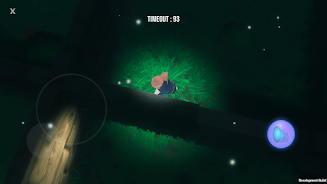
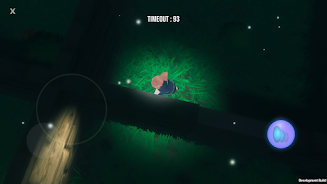
Visual design aims for clarity and readability under pressure. Environments use contrasting silhouettes and clear sightlines to support hide-and-seek gameplay, while lighting and sound cues help both Hiders and Seekers read the action. Audio feedback is used deliberately: footsteps, rustles and minor ambient cues give attentive players an edge without cluttering the soundscape. Overall the presentation favors function over flashy effects so players can focus on tactics.
Level structure and variety
Maps are compact and designed to create interesting sightlines, multiple hiding opportunities, and meaningful chokepoints. Although the game currently centers on a single hide-and-seek mode, available maps vary in verticality, obstacle density and route options to alter pacing from map to map. Each level encourages different approaches — some reward long-term stealth and careful movement, others favor quick flanking and aggressive pursuit.
Customization and role choices
Customization in The Palindrome is centered on tailoring how you approach a role rather than changing core rules. Players select from role-specific skill options that shape a character’s utility in rounds, allowing you to prioritize mobility, deception or support functions. Cosmetic choices that do not affect gameplay are available to help players express themselves and make it easier to identify teammates and opponents during matches.
Replay value and match flow
Replay value comes from the inherently dynamic nature of the role swap and conversion mechanic: captures change team composition and force new tactics mid-match. Short match lengths make it easy to play multiple rounds in a session, and the emergent team dynamics created when Hiders are converted to Seekers produce memorable comeback scenarios and tense finishes. The compact rounds encourage iterative learning and experimentation with different skill loadouts.
Accessibility and user experience
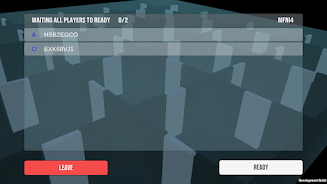
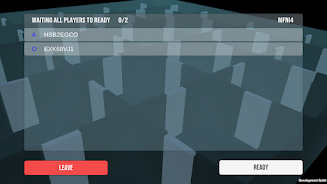
The Palindrome includes adjustable difficulty cues and a clear tutorial to make the game approachable for new players. Visual clarity options and simplified control modes help accommodate different playstyles and accessibility needs. The interface presents timer information, team composition, and role status in a straightforward manner so players can make informed decisions under pressure.
Practice and challenge systems
To help players ramp up, the game offers guided practice that explains role mechanics and sample encounters that simulate common match situations. Challenge-like objectives encourage focused improvement — for example, learning to survive a full round as a Hider or securing a specified number of captures as a Seeker — without requiring external ranking systems. These helpers support steady improvement while keeping the focus on core hide-and-seek action.
- No virus
- No advertising
- User protection
Information
- File size: 22.90 M
- Language: English
- Latest Version: 1.0.2
- Requirements: Android
- Votes: 190
- Package ID: me.thepalindrome
- Developer: Zracores
Screenshots


















Explore More
Become the leader of your own thriving settlement in this addictive new strategy game. Build and customize homes, shops, farms and more to expand your village. Manage resources carefully to keep your people happy and productive. Send explorers on missions to find valuable loot and artifacts. Defend against raider attacks with walls, traps and an army of your own. With randomly generated maps and emergent gameplay, no two games are the same.

Dungeon Lust

Survivor Strain

I Love it! Palladian Church Sisters-Beach Side

BreedTown 2 Final

Homo Evolution Mod

Selobus Arena

Yokuhime Revolution

Ero-Card Showdown, Yokai Edition