
Introduction
Army Chess is a modern, mobile adaptation of a classic rank-based board wargame that emphasizes positional planning, terrain effects and step-by-step tactical decisions. In Army Chess each player commands a formation of ranked pieces—from Marshal down to Engineer—along with bombs, landmines and a protected flag; the primary goal is to capture the opponent’s flag while using roads, railroads and campsites to shape movement and defense. This editor introduction explains how Army Chess plays, what to expect from controls and visuals, and why the game offers long-term replay value for players who enjoy careful, turn-based strategy.
Key features and board elements
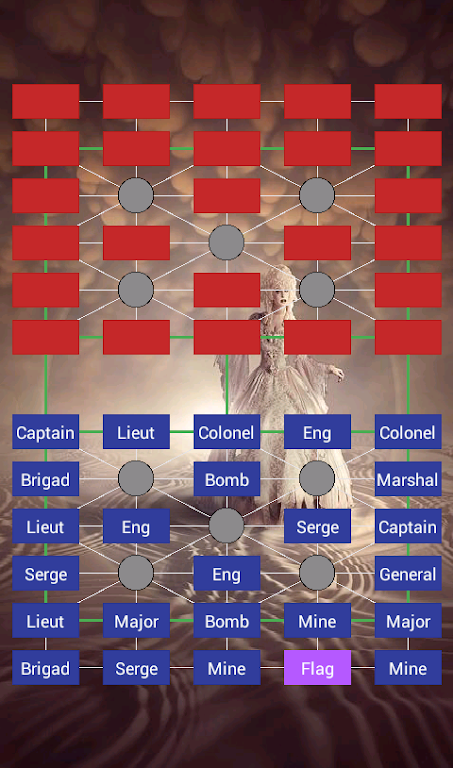
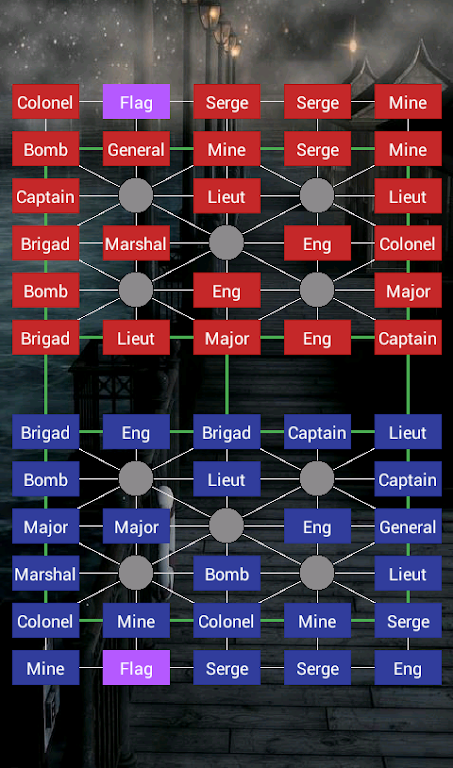
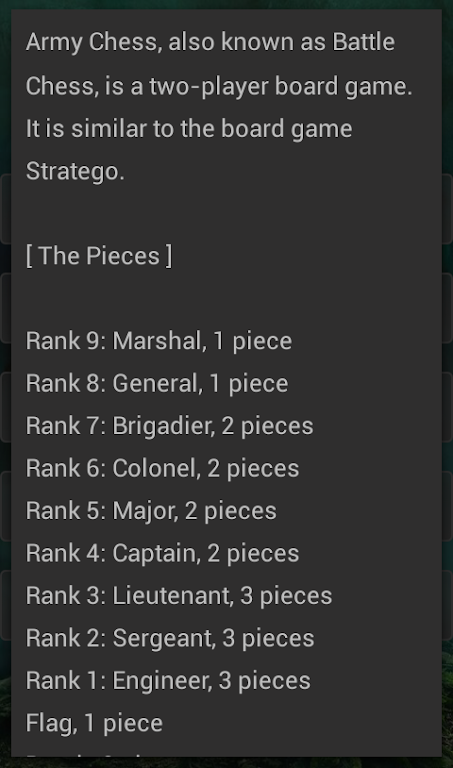
The board in Army Chess is terrain-rich: railroads allow long straight-line travel, with Engineers able to corner on tracks for unique routing; roads speed regular movement; campsites act as safe spaces where pieces cannot be attacked; and a headquarters square holds each side’s immobile flag. Piece hierarchy is central to resolution of combat, with higher-ranked officers defeating lower-ranked ones in direct encounters, and special items such as bombs and landmines adding positional hazards that change risk calculations. These elements combine to create a layered rule set that rewards planning and understanding of piece interactions rather than brute-force tactics.
Gameplay mechanics and strategic depth
Matches are turn-based and focus on alternating moves that prioritize positioning and threat management. Movement rules are straightforward but strategically rich: selecting one piece and choosing its destination resolves conflicts according to rank and special rules for bombs and mines. Campsites introduce defensive staging areas where pieces are immune to capture, encouraging players to build supply lines and control key squares. Because the flag cannot move from headquarters, endgame strategy often centers on coordinated probes, sacrificial exchanges and use of rail lines to shift forces rapidly. These mechanics give rise to deep, emergent play without relying on chance.
Controls, usability and accessibility
Controls are designed for clarity and ease on touch devices: tap to select a piece, tap a destination to move, and receive on-screen highlights that show legal moves and potential captures. Contextual tooltips and piece labels help new players learn rank interactions, and visual cues indicate turn ownership and which pieces are on special terrain. Accessibility considerations include high-contrast piece outlines and distinct iconography so the game remains navigable for players with color-vision differences; animation speeds and sound cues can be adjusted to suit different preferences, creating a comfortable experience for a wide range of users.
Visual style, presentation and customization
The visual presentation favors clear, readable graphics that make tactical information easy to parse at a glance. Boards use contrasting textures for roads, rails and campsites so players can immediately assess movement options. A set of tasteful piece styles and color themes lets users personalize the look of the board to improve visibility or simply match their aesthetic taste. The interface balances clean, minimal overlays with informative labels so the game feels modern without obscuring the underlying strategy.
Progression, learning curve and replay value
Army Chess does not rely on leveling systems; progression is player-driven as individuals deepen their understanding of rank interactions, terrain advantages and timing. New players can expect an initial learning phase as they memorize piece strengths and the tactical implications of campsites and railroads, after which matches open up into complex planning contests. Replay value comes from the wide range of possible engagements between ranked pieces and the tactical diversity created by terrain: the same board position can evolve differently depending on tempo, sacrifices and whether players prioritize positional control or direct assaults.
Offline play, challenges and trade-offs
This title is built for local two-player contests and is ideal for pass-and-play sessions on a single device; it does not require an internet connection to play. That local focus means Army Chess shines as a head-to-head strategy exercise, but it also has trade-offs: the immobile flag can make some endgames feel constrained, and the variety of piece types and special items introduces a learning curve for newcomers. Players who enjoy methodical, competitive planning will find the tactical depth rewarding, while those seeking fast, solo arcade action may find the pace deliberate by design.
Overall, Army Chess offers a compact but rich strategic experience rooted in piece hierarchy and terrain interaction, with thoughtful controls, clear visuals and options to tailor the interface for accessibility. The game emphasizes human decision-making, positional foresight and incremental learning, making it a solid choice for players who prefer slow-burn strategy and repeatable, thought-provoking matches.
- No virus
- No advertising
- User protection
Information
- File size: 4.00 M
- Language: English
- Latest Version: 1.4.0
- Requirements: Android
- Votes: 465
- Package ID: com.stoxline.armychess
- Developer: Stoxline
Screenshots

















Explore More
Recapture the magic of classic gaming with our new fast-paced arcade extravaganza! Simple and addictive, get ready for high scores galore. With bright retro graphics and pulse-pounding beats, it’s nonstop action right from the start. Tap into your reflexes and dexterity to overcome high-speed challenges. Face off against devious enemies and formidable bosses. Unlock new levels, power-ups and secrets as you advance.
View more