

Introduction
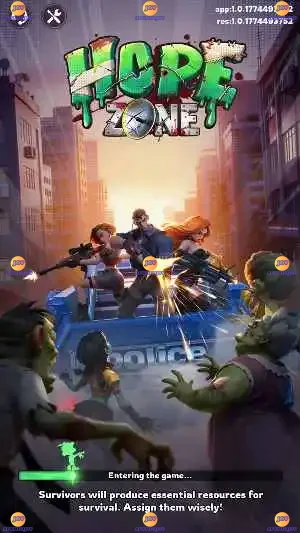
Hope Zone is a strategy city-builder that places you in command of the last survivor settlement after a mysterious virus collapses civilization. In Hope Zone you balance base construction, survivor care and equipment, and hazardous desert expeditions while a narrative about the outbreak and the people left behind unfolds through missions and character backstories.
Key features and core loop
The game centers on three connected pillars: settlement management, tactical expeditions, and long-term research. You expand and organize a modular base, assign survivors to jobs, and manage resources so the community can withstand waves of evolving infected threats that mutate into tougher variants. Expeditions send small teams into desert ruins to gather supplies, reveal story fragments, and unlock new technologies. A dual tech tree lets you choose paths focused on scientific development or military capability, and late-game content includes competitive PvP and alliance warfare for groups of players who want coordinated large-scale objectives. Hope Zone is free-to-play on Android with ad support.
Gameplay mechanics
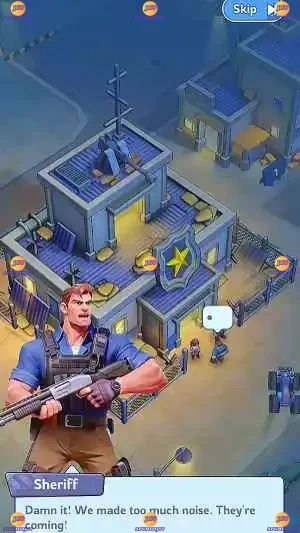
Gameplay combines city-building with light tactical management. Buildings provide specific functions—housing, workshops, farms, medical bays—and placement affects workflow and efficiency. Survivors have unique stats and slowly revealed backstories that influence their morale and performance on tasks and missions. Expeditions are played out as short, risk-versus-reward scenarios where planning loadouts and choosing which characters to send matters; failure can be costly, and character loss has narrative weight. The evolving infected system creates shifting tactical priorities, encouraging players to adapt base defenses and scouting routines rather than rely on a single approach.
Controls and interface
Controls are optimized for touch: drag-and-drop building placement, tap-to-assign workers, and contextual menus for research and crafting. Action menus are layered to keep common commands accessible, while more detailed management screens offer finer control over workforce distribution and production queues. Note that players on smaller devices may find some labor-assignment and micromanagement screens compact; the game supports pinch-zoom to help navigate dense bases and provides shortcuts for common commands to reduce repetitive taps.
Progression, tech and challenge systems
Progression is driven by resource acquisition, research milestones, and campaign discoveries. The dual tech tree shapes mid- and late-game strategy—one branch improves civilian infrastructure, efficiencies, and survival tools; the other unlocks stronger defenses, weapons, and combat doctrines. Challenge scales over time through incident events and mutated enemy variants that require periodic rethinking of base layout and expedition composition. Season-like content and timed challenges are used to introduce new threats and rewards for engaged players, while long-term progression favors measured planning over short bursts of growth.
Visual style and level structure
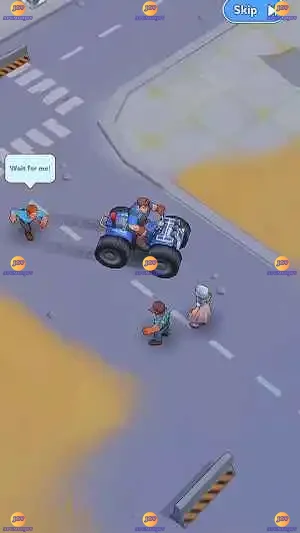
The visual presentation leans into a gritty, sun-baked aesthetic: muted desert palettes, improvised architecture, and weathered character designs that emphasize survival over polish. Levels are organized into campaign regions and repeatable expedition zones that steadily expand the map of the outbreak as you progress. The UI aims to be functional and readable, prioritizing information density for strategic decision-making while keeping on-screen clutter manageable during combat encounters.
Customization and replay value
Base layout, survivor roles, and tech choices create meaningful customization: two players with similar progression can end up with very different settlements depending on research priorities and workforce assignments. Randomized expedition rewards, evolving enemy types, and alliance objectives increase replay value by encouraging experimentation with different team compositions and defensive philosophies. Optional cosmetic options and base decorations let players personalize their settlement without affecting balance.
User experience, accessibility and performance
Hope Zone provides adjustable difficulty settings and readable text sizing to improve accessibility. Tutorials introduce core systems gradually, although new players should expect an initially dense set of mechanics and many interface tabs to learn. Performance is tuned for a broad range of Android devices; graphics settings can be lowered to improve responsiveness on older hardware. In-game tips and a searchable help section assist with deeper systems like research synergies and workforce optimization.
Connectivity and offline play
Basic base building, management, and many expedition mechanics are playable without a constant connection, allowing short play sessions on the go. Features that affect other players—such as PvP and alliance warfare—require an online connection and are gated as late-game content for groups who want coordinated multiplayer experiences. Ads are present as part of the free model and can be removed by in-app options where available.
Developer and early reception
StarFortune developed Hope Zone; the studio previously released titles in similar strategy and RPG-adjacent spaces and brings that experience to this project. Since its Android launch, the title has attracted attention for its narrative focus and emergent difficulty from the mutating infected system while feedback has highlighted areas where onboarding and community size could improve as the game matures.
- No virus
- No advertising
- User protection
Information
- File size: 3.40 M
- Language: English
- Latest Version: 1.0
- Requirements: Android
- Votes: 246
- Package ID: RR33.COM
- Developer: StarFortune
Screenshots
















Explore More
Become the leader of your own thriving settlement in this addictive new strategy game. Build and customize homes, shops, farms and more to expand your village. Manage resources carefully to keep your people happy and productive. Send explorers on missions to find valuable loot and artifacts. Defend against raider attacks with walls, traps and an army of your own. With randomly generated maps and emergent gameplay, no two games are the same.
View more