Introduction
Komi Can’t Resist is a narrative-driven visual novel set on a contemporary university campus that puts you in the shoes of Komi and Hitohito as they manage everyday interactions, social awkwardness, and the subtle decisions that shape relationships over time. This early release emphasizes conversation, atmosphere, and character detail rather than fast action: readers follow quiet moments, choose responses in branching dialogue trees, and watch short scenes accumulate into meaningful arcs. The description below outlines core systems, controls, visual approach, and what to expect from Komi Can’t Resist in its current 0.1 build.
Key Features
The game combines classic visual novel presentation with branching conversation mechanics and an intentionally compact cast to keep scenes intimate and focused. Dialogue trees create meaningful forks where a single reply can shift character attitudes and unlock different scenes later on. Story pacing is deliberate—scenes are anchored to campus locations like classrooms, club rooms, cafeterias and evening walks so that setting and timing matter. Players who enjoy reading-rich, decision-led experiences will find the title’s focus on interpersonal nuance rewarding.
Gameplay and Controls
Gameplay centers on choice-based progression: advance lines with a single tap or click, pick from multiple response options, and occasionally replay a scene to explore alternate phrasing. Controls are purposefully simple to reduce friction—tappable dialogue progression, a persistent text log to review previous lines, and sliders or toggles to adjust text speed and auto-advance behavior. These controls keep the interface approachable on phones and tablets while preserving a contemplative tempo that highlights consequence over reflex.
Progression and Replay Value
Progression is driven by relationship states and story flags rather than stats or inventories. Choices modify affinity and branching flags that determine which reactions and scenes become available, and multiple endings are unlocked by cumulative decisions across chapters. Branches both diverge and reconnect, so replaying a chapter often reveals previously unseen responses and deeper character context. Scene replays and manual save slots make it straightforward to return to key decision points and pursue alternate outcomes.
Visual Style and Presentation
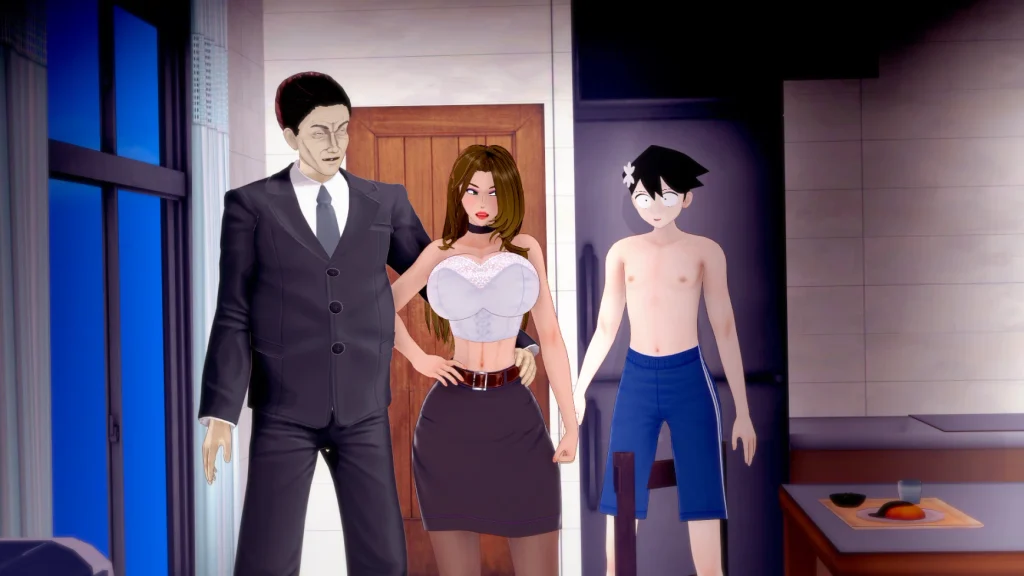
The presentation places emphasis on readable text and expressive character portraits rather than heavy animation. Portraits shift subtly to reflect emotional nuance while backgrounds are detailed enough to convey place and mood without distracting from dialogue. Typography, line spacing, and contrast are designed for extended reading sessions, and UI elements are kept minimal to place narrative and character beats front and center. The overall art direction supports the slow-burn storytelling approach of the game.
Level Structure and Scene Design
Story content is organized into chapters and episodic scenes that represent days, events, or turning points on campus. Each scene includes decision points that can ripple into later chapters, and segments are written to work both as short play sessions and as parts of a longer narrative arc. This chapter-based structure supports casual drop-in play as well as deeper replay-driven exploration to see how small choices change long-term dynamics.
Customization and Accessibility
While heavy cosmetic character customization is not a central feature, the game offers user-facing options to tailor the reading experience: adjustable text size, audio toggles for background music and effects, an auto-advance mode, and a persistent text log. Accessibility-minded choices—contrast-aware UI, clear fonts, and simple navigation—help make the narrative approachable for players with a range of reading preferences and visual needs.
Offline Play and User Experience
The single-player core is fully available offline after installation so players can read and make decisions without an internet connection. The save system captures branching progress with autosave between scenes and clear manual-save prompts, allowing players to preserve favorite branches and return to specific moments. Performance is optimized for mobile devices to keep load times short and interruptions minimal.
Challenge Systems and Emotional Stakes
Challenges in the game are narrative and emotional rather than mechanical: timing, honesty, and empathy in conversations lead to different reactions and relationship paths. The design encourages careful reading and experimentation to appreciate subtle shifts in character behavior, and the narrative weight of choices provides reward through insight rather than scoreboard metrics.
Development and Version Information
Rubystiles Games, an independent studio with a focus on mature, story-first projects, released Komi Can’t Resist as an early 0.1 build to establish core mechanics and initial branching paths. The developer intends to iterate on pacing, expand scenes, and refine UI based on player feedback; community input during early access will help shape future updates. The current content is best suited to adult players due to mature thematic material presented in a non-explicit narrative context.
Advantages and Limitations
This title provides a character-focused, emotionally driven experience that rewards careful reading and multiple playthroughs. At the same time, players should be aware this is an early release with limited content compared to a full product: mechanics, pacing, and scene volume are planned to expand in later updates. If you appreciate slow-burning storytelling and branching conversation systems, Komi Can’t Resist offers a thoughtful foundation to explore while the developer continues to build on the experience.
- No virus
- No advertising
- User protection
Information
- File size: 1103.91 M
- Language: English
- Latest Version: 0.1
- Requirements: Android
- Votes: 108
- Package ID: com.kc.r
- Developer: Rubystiles
Screenshots




















Explore More
Looking for some quick gaming fun? Our new super-casual game is perfect for entertaining bursts in your busy day. With simple, intuitive gameplay crossed with challenges that engage your brain, you'll keep coming back again and again. No complex controls or tutorials - just open and play anywhere, anytime. Vibrant art style and upbeat music create a lighthearted experience.

Fantasy Futanari

Hive Rebirth

Digital Crush

Office Feeder

Miami City of Temptation

Within

EchiMemory

Incredible Desire