


Introduction
Most cooperative VR titles frustrate players by making teamwork feel accidental rather than essential. Dual Sight Defense takes the opposite approach, centering every encounter on shared perception and split responsibilities so you and a partner must talk, coordinate, and cover each other to survive a haunted estate. Designed for two Meta Quest headsets on the same local network, Dual Sight Defense blends tense atmosphere, a simple control set, and an asymmetric sight rule that forces real collaboration instead of lone heroics.
Categories:
Genre: Cooperative VR horror with focused puzzle-combat elements that reward communication.
Platform: Meta Quest headsets on a LAN; two devices are required to play together.
Player count: Strictly two players in online co-op sessions where each agent has a different visual perspective.
Gameplay of Dual Sight Defense
Core loop: Move through the mansion, spot threats, mark positions, and shoot when your partner can handle what you cannot.
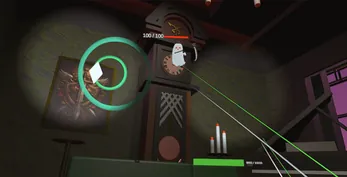
Asymmetric vision rule: One player perceives ghosts but can only eliminate demons, while the other sees demons and can only defeat ghosts; this inversion is the game's main twist.
Interaction tools: A simple pin system lets you flag enemy locations for your partner, and standard movement and firing controls keep the focus on cooperation rather than complex inputs.
Features:
Two-player focus: Levels and encounters are balanced around intimate duos rather than single-player progression or large teams.
Local network play: Sessions run over a shared LAN connection, keeping latency low and voice chat responsive when coordinating tactics.
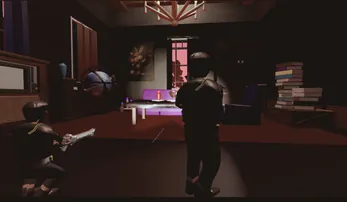
Atmospheric mansion setting: Tight hallways, shadowed rooms, and subtle audio cues build suspense without overwhelming the core mechanic of shared sight.
Minimal learning curve: Movement, aiming, and pinning use familiar VR controls, letting new players jump into tense rounds quickly.
Tips and Tricks:
Talk constantly: Use short, clear calls to indicate whether an enemy is a ghost or demon and where it appears so your partner can respond correctly.
Use pins strategically: Mark escape routes or choke points as well as enemy positions to guide defensive setups and avoid surprises.
Split roles deliberately: One player can scout ahead while the other covers likely ambush zones; alternating these roles keeps both players involved and reduces fatigue.
Practice loadouts together: If there are weapon or gadget choices, try combinations in a safe hallway to learn reach and timing before tackling denser rooms.
FAQs:
Do I need two headsets to play?
Yes. Dual Sight Defense requires two Meta Quest headsets connected on the same local network; it is built around two-player cooperation and cannot be played solo or on a single device.
Is online matchmaking available?
The game emphasizes private sessions over public matchmaking, so you should plan to connect with a friend or join a small group that can set up a local co-op game.
How long are typical sessions?
Match length varies by how cautiously you proceed; focused runs through a mansion segment can take from a few tense minutes to longer, more methodical explorations depending on your play style.
Conclusion:
Dual Sight Defense turns the familiar co-op loop into a deliberate exercise in communication and role management, offering a compact horror experience best enjoyed with a reliable partner; if you can bring two Meta Quest headsets and a teammate, give Dual Sight Defense a try and see how well your coordination holds up.
- No virus
- No advertising
- User protection
Information
- File size: 130.67 M
- Language: English
- Latest Version: 1.0
- Requirements: Android
- Votes: 318
- Package ID: itchio_bsgj2026-dual-sight-defense-xr02
- Developer: bitsummit-gamejam
Screenshots


















Explore More
Are you searching for an enjoyable method to strengthen your intellect? Our hottest logical puzzle is tailor-made to offer a stress-free pastime experience. With beautiful graphics and chill background music, you can immerse yourself in an engaging world of logic and critical thinking. Solve increasingly tricky levels at your own pace, with no time pressure or lives system.

Lust Lines

Survive Min
Far Manor

Malibu: Golden Hours

Little Escapades: Exposed Night Walk

Jessica Rabbit Click-Click

Larry, el gnomo ignífugo

The Lust Grimoire