

Introduction
Slave Of The Female Knights places players in a compact, choice-driven medieval setting where a council of female commanders oversees a fortified town and its surrounding enclaves. In Slave Of The Female Knights the emphasis is on short narrative scenes, clear decision points, and the examination of mature themes such as authority and consent without explicit description of sexual acts. This visual roleplaying experience aims to deliver tightly focused encounters, moral dilemmas, and relationship shifts while remaining accessible to players who prefer concise, scene-based storytelling.
Key Features
The game centers on branching dialogue and decisive choices that influence alliances, reputation, and future options. Players meet a cast of distinctive commanders, each with a defined personality and predictable but evolving responses to the protagonist. The setting includes a castle town, knight quarters, hidden passages and an optional post-game area called the Rec Room which contains additional scenes and challenges unlocked after the main story. Customization at the start of the game allows you to set appearance and a few backstory elements that influence initial reactions and available lines of dialogue.
Gameplay and Controls
Gameplay is driven by classic visual novel mechanics combined with light roleplaying elements: read a scene, choose from several responses, and observe how characters react. Controls are deliberately simple and optimized for both touch and mouse input, using tappable dialogue choices and on-screen buttons to navigate menus and save slots. The interface keeps focus on text and portrait art while providing clear indicators for available choices and locked options. Scenes are typically short, designed for play in brief sessions, and save and resume functionality allows players to pick up where they left off.
Progression Systems
Progression revolves around a resource called Obedience Points which unlock alternate dialogue options, restricted tasks, and some late-game branches. Points are gained and lost based on decisions, with some outcomes reversible through specific choices while others are permanent to preserve meaningful consequence. The game tracks relationships with individual commanders, and reputation affects everything from the tone of conversations to access to secret locations. There are also simple challenge moments where timing or selection matters, adding a light test of attention to decision making.
Visual Style and Level Structure
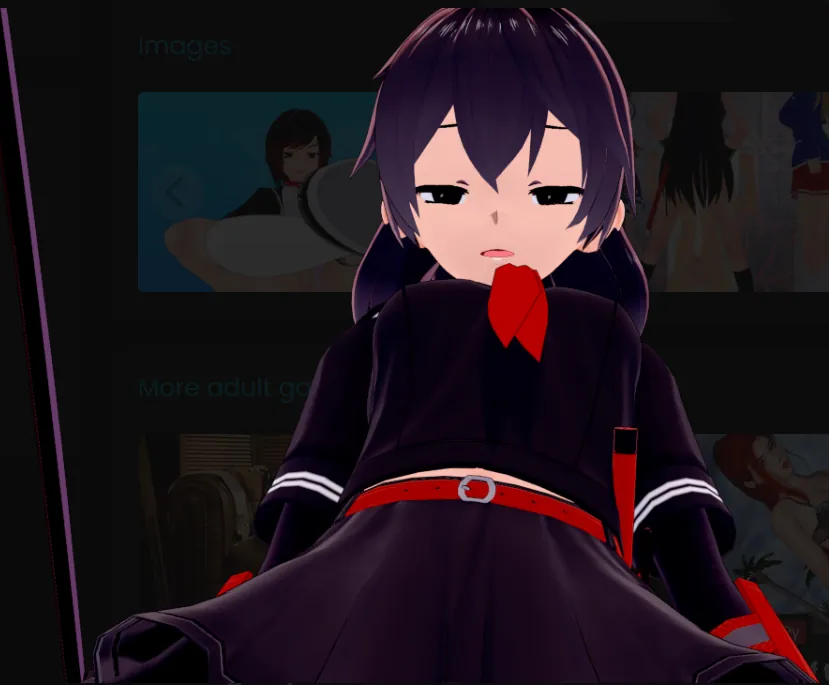
The visual presentation focuses on character portraits, dialogue boxes, and evocative background illustrations that establish different areas of the town and the knights' quarters. Scenes are arranged like linked vignettes rather than open levels, so the structure favors depth in short encounters over long exploration. This episodic approach makes it easy to replay particular branches and to sample alternate outcomes without redoing unrelated content. Art and writing work together to convey atmosphere and personality rather than lengthy exposition.
Customization and Replay Value
Character creation is streamlined but impactful: a few key options set the protagonist's starting traits and influence initial relationship dynamics. Replay value comes from branching paths, multiple commander storylines, and the Rec Room bonus content that becomes available after completing the main narrative. Because many choices alter access to scenes and certain endings, players who enjoy exploring consequence and branching narratives will find reasons to revisit the game and test different strategies.
User Experience and Accessibility
The game is designed for offline play, so progress and save data are stored locally and do not require a network connection. Accessibility options include adjustable text size and a simple control layout that reduces clutter for players using smaller screens. The pacing is intentionally compact to accommodate short play sessions, and the UI offers multiple save slots to support experimentation with choices. The writing aims to be neutral and informative, so mature themes are presented in a contextual manner rather than as explicit content.
Advantages
Slave Of The Female Knights offers a focused narrative that is easy to pick up and play, with clear cause-and-effect mechanics that make choices feel consequential. The small, well-defined cast allows for rapid development of interpersonal dynamics and recognizable character arcs. The Rec Room and multiple endings create modest but meaningful incentives to replay the game and discover alternate scenes.
Disadvantages
The experience is brief and relatively linear compared with larger visual novels, and some players may find individual scenes feel familiar if they are experienced with similar genre titles. A few sections and optional scenes are harder to trigger and can give a sense of incompleteness for completionists. Overall, the game is best suited to players seeking a compact, scene-driven narrative with mature thematic content presented in a restrained, story-focused manner.
- No virus
- No advertising
- User protection
Information
- File size: 338.63 M
- Language: English
- Latest Version: 0.4
- Requirements: Android
- Votes: 90
- Package ID: id.application.RebelAcademy
- Developer: SaltySai Itch.ioSubscribeStar
Screenshots














Explore More
Experience nonstop thrills with our newest edge-of-your-seat action game! With console-quality graphics and intuitive touchscreen controls, you'll be drawn into high-octane combat and stunt-driven gameplay. Choose from an arsenal of upgradable weapons and vehicles to blaze through enemy bases, post-apocalyptic cities, and more. Physics-based action packed with explosions and destructible environments make every level more intense than the last.

My Magical Demon Lover Yaoi VN Demo

Exodus Fvn

Angry Mother -fast and furious guy

MrElegant Diaries
MetaMorph

Lewd

MS Hinata

Project Kiiro 1.0