Introduction
The Last Human places you into a tense single-player survival experience set in a devastated city and the surrounding countryside, where careful choices and resource management shape each playthrough. As an editor summary, this introduction to The Last Human explains what to expect from exploration, scavenging, combat and progression so you can decide if the tone and systems suit your preferences. The description focuses on core mechanics and user-facing options rather than marketing promises, highlighting how the game balances environmental storytelling, emergent encounters and adjustable difficulty in a compact, replayable package.
Key Features
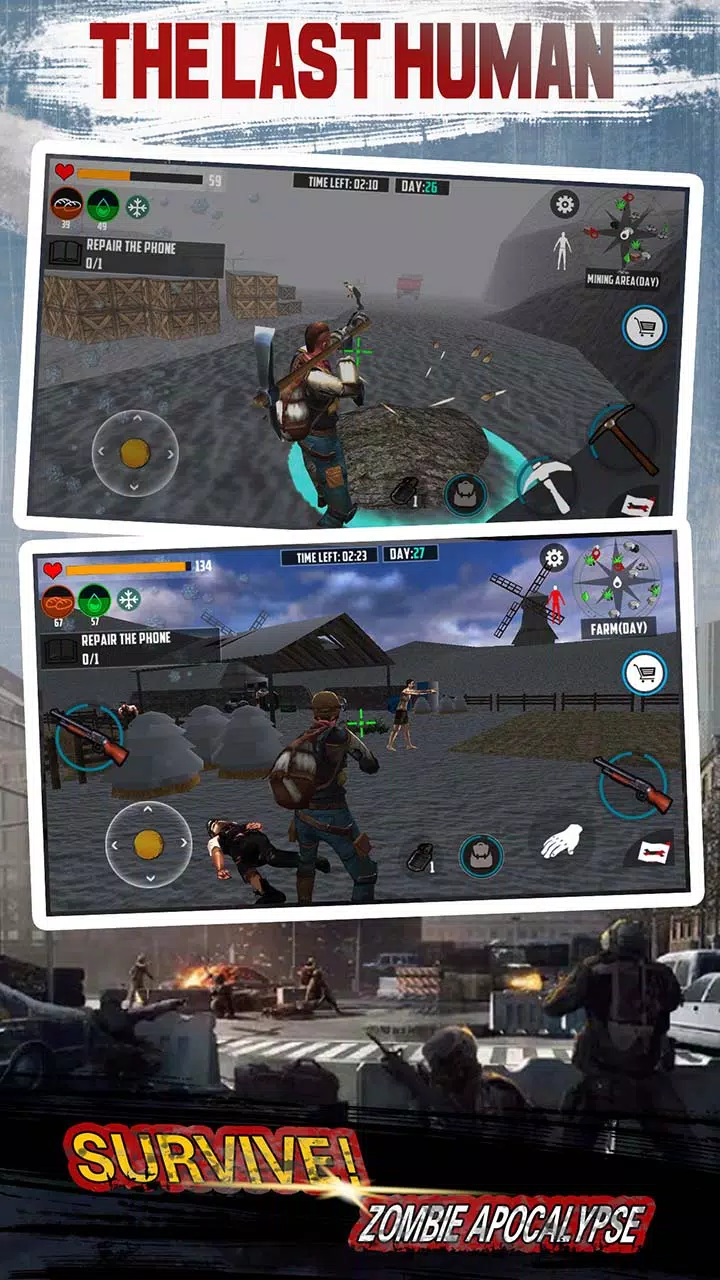
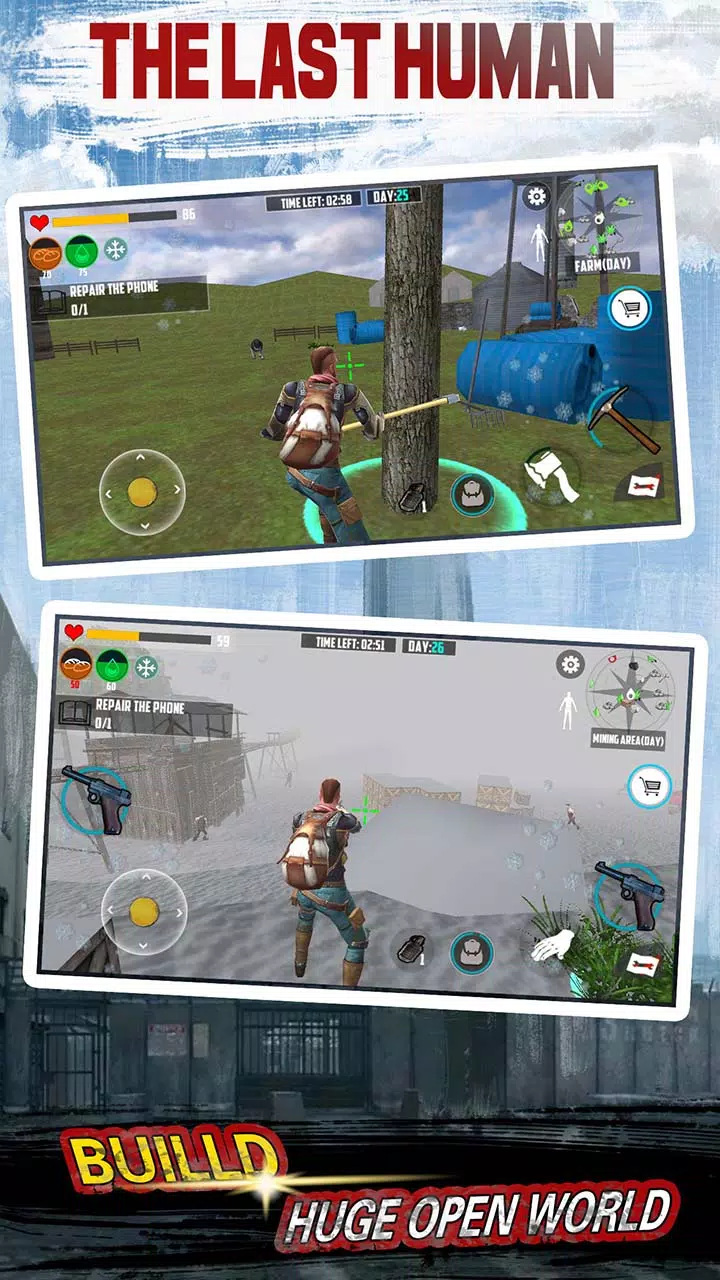
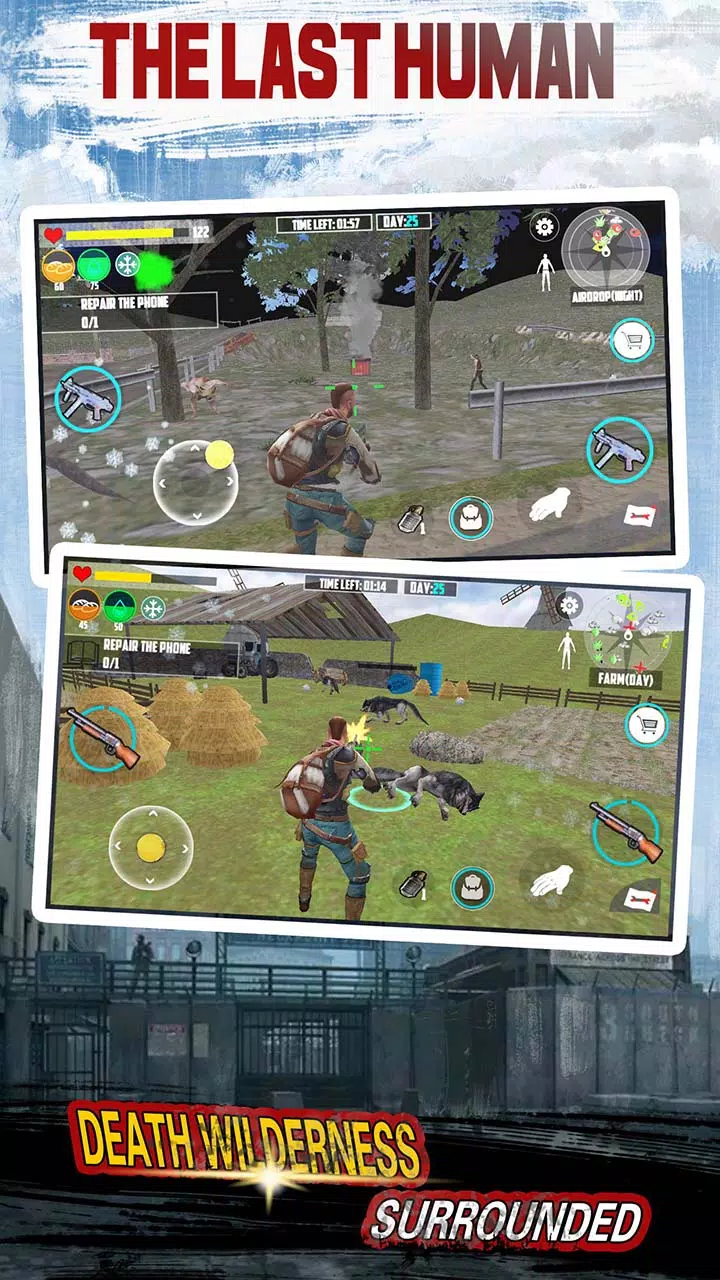
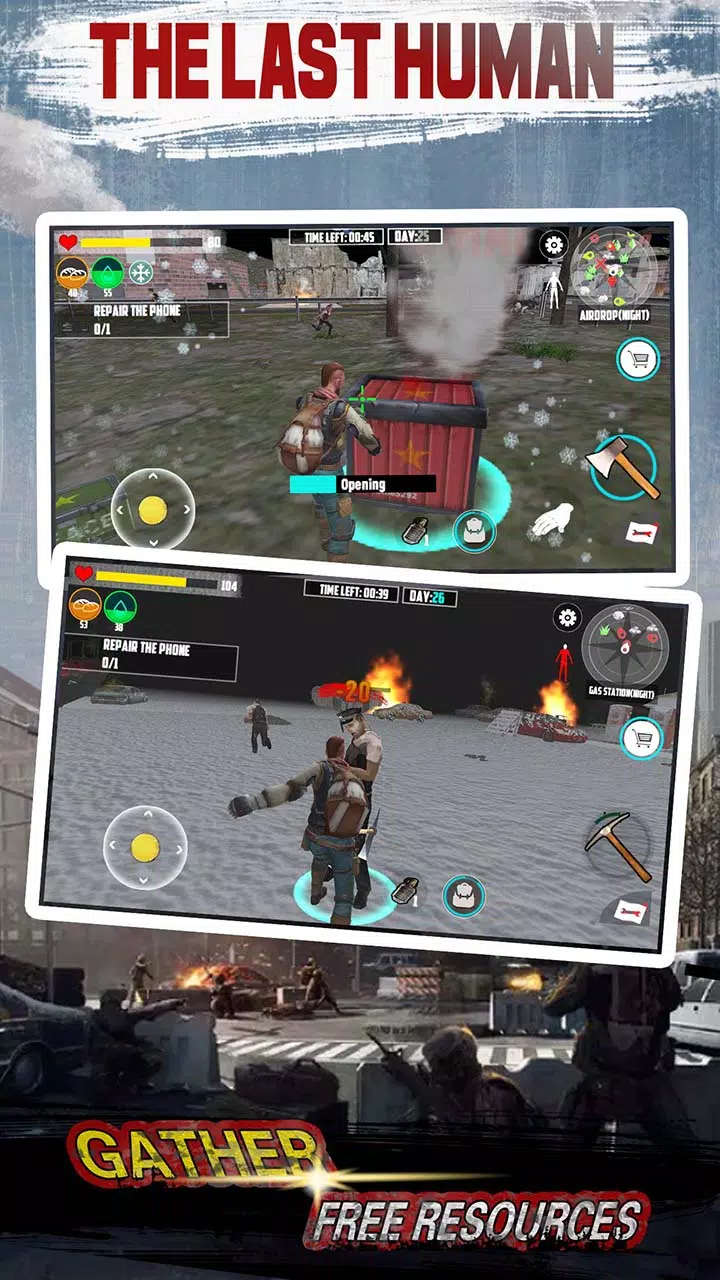
The Last Human presents an open 3D map that ranges from crumbling urban towers and industrial oil fields to reclaimed farmland and fortified military sites. Exploration is rewarded through hidden caches, readable notes left by previous inhabitants and environmental puzzles that hint at the broader story. Encounters are emergent: a quiet rooftop can turn dangerous when resources are scarce, and discoveries often influence available paths through the world. Combat mixes melee tools, firearms and improvised explosives while scavenging and crafting expand tactical options without requiring complex menus.
Gameplay & Controls
Gameplay emphasizes situational decision-making over reflex-only challenges; players must balance immediate survival against longer-term goals. Controls are designed for touch screens with context-sensitive interaction points for scavenging, opening doors and operating workbenches. A combination of tap targets and simple gestures governs aiming and weapon handling so actions feel responsive on mobile hardware. Inventory management is intentionally direct: quick-swap slots and intuitive drag-and-drop interaction let you change loadouts in the field without disrupting the flow of exploration and encounters.
Progression & Customization
Character progression is built around a perks and equipment system that rewards exploration and deliberate play. Perks grant passive benefits or unlock new tactical options, while weapons and gear can be scavenged, repaired and upgraded with parts found around the map. Loadouts can be tailored to favor stealth, ranged combat or improvised tools for utility and survival. Choices about which perks to pursue change how you approach future scenarios and open alternate routes through the environment, supporting distinct playstyles across multiple runs.
World, Visuals & Level Structure
The visual approach prioritizes atmosphere and readability: ruined architecture, rusted infrastructure and pockets of overgrown vegetation create varied backdrops that communicate danger and opportunity at a glance. Levels use verticality in urban ruins and expansive layouts in rural zones to encourage shifting tactics from rooftop scouting to cautious ground-level forays. Environmental cues and layered sound design guide attention toward threats and rewards, while modular level design supports branching paths, optional side areas and story beats that reveal themselves across successive playthroughs.
Replayability & Challenge Systems
Replay value comes from hidden mechanics, random events and branching choices that lead to multiple endings and different narrative fragments. Scarcity of resources and meaningful consequences for risky actions make survival decisions consequential rather than arbitrary. The game intentionally creates tension through trade-offs: carry extra supplies and move slower, or travel light and accept greater immediate danger. Experimentation with different perk combinations and routes through the map is encouraged and often reveals new approaches to recurring challenges.
User Experience & Accessibility
The Last Human includes options to accommodate a range of skill levels and preferences, such as adjustable difficulty settings, control sensitivity and subtitle options for narrative text. UI elements are designed to remain readable on small screens and menus prioritize clarity for scavenging and loadout adjustments so players can make informed choices quickly. Accessibility considerations extend to font sizing, color contrast and straightforward interaction points that reduce precision demands without removing core mechanical decisions.
Offline Play & Performance
Built as a single-player experience, the game supports offline play and focuses on stable performance across a variety of devices. Load times and responsiveness are balanced to keep exploration immersive while avoiding prolonged waits between encounters. Systems are tuned to favor meaningful, locally simulated choices rather than reliance on networked features, making The Last Human a self-contained survival experience that rewards curiosity, planning and careful resource management.
- No virus
- No advertising
- User protection
Information
- File size: 43.10 M
- Language: English
- Latest Version: 1.1
- Requirements: Android
- Votes: 93
- Package ID: com.kevin.thelasthuman
- Developer: kevin.wang
Screenshots
















Explore More
Are you searching for an enjoyable method to strengthen your intellect? Our hottest logical puzzle is tailor-made to offer a stress-free pastime experience. With beautiful graphics and chill background music, you can immerse yourself in an engaging world of logic and critical thinking. Solve increasingly tricky levels at your own pace, with no time pressure or lives system.

Return to the Abbey

NyaNyaLand - Cute Cat Game

Occultus: The Craving

Tiny Bots

Girl's Chronicle

Adivinhe Cúmplices de um Resgate: O Jogo

Vanessa Whitmore

Word Bakery