Introduction
My Story puts you at the center of a player-driven adventure where every choice reshapes characters, plot threads, and the world around you. In the opening moments you'll see how decisions create branching consequences, and the interface is tuned to make exploration, conversation, and creative experimentation straightforward and rewarding. My Story combines branching story mechanics, interactive dialogue, and optional AI-assisted imagery so you can build quests, mysteries, and long-form sagas while enjoying a clear control scheme and meaningful progression.
Key Features
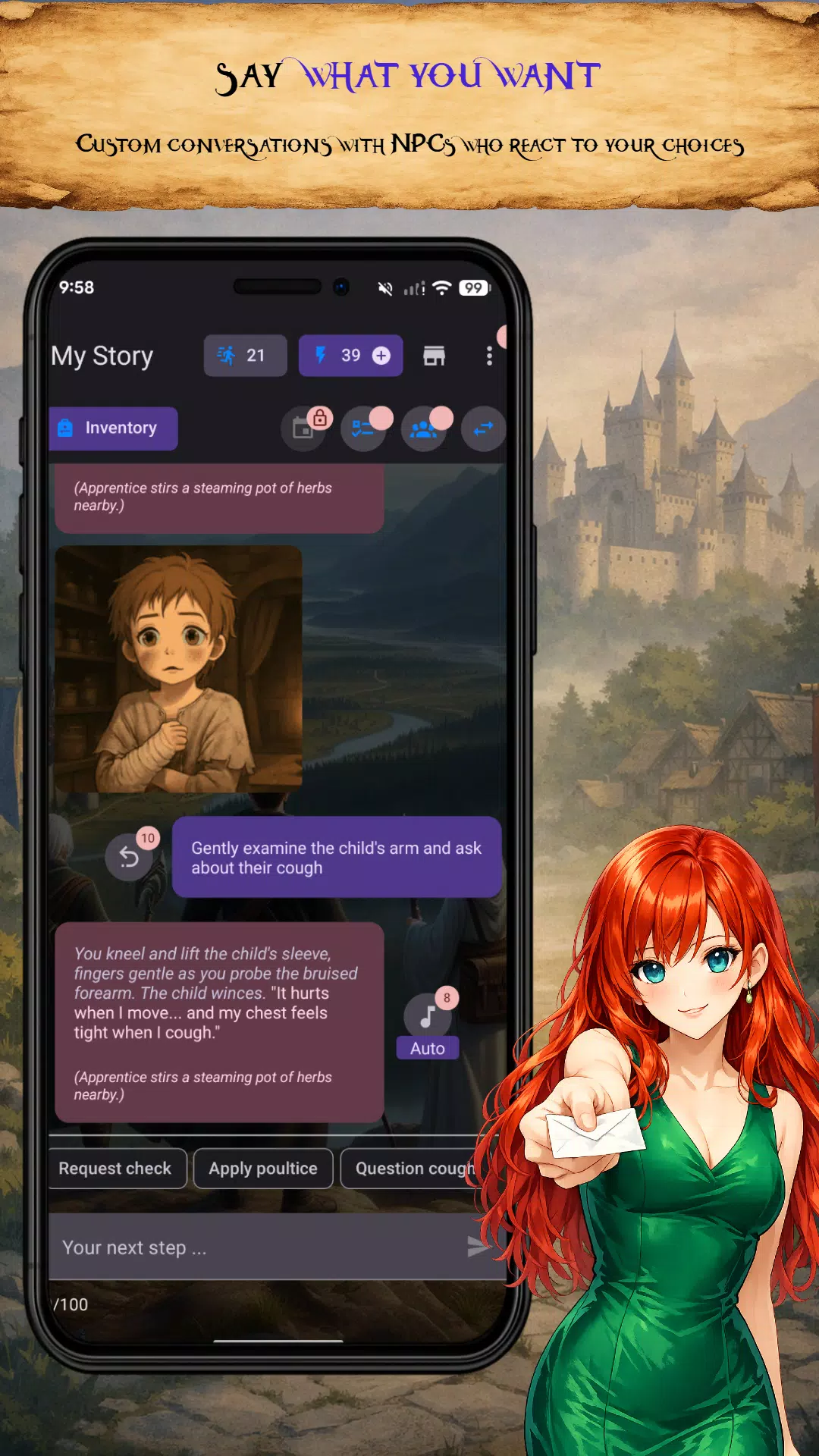
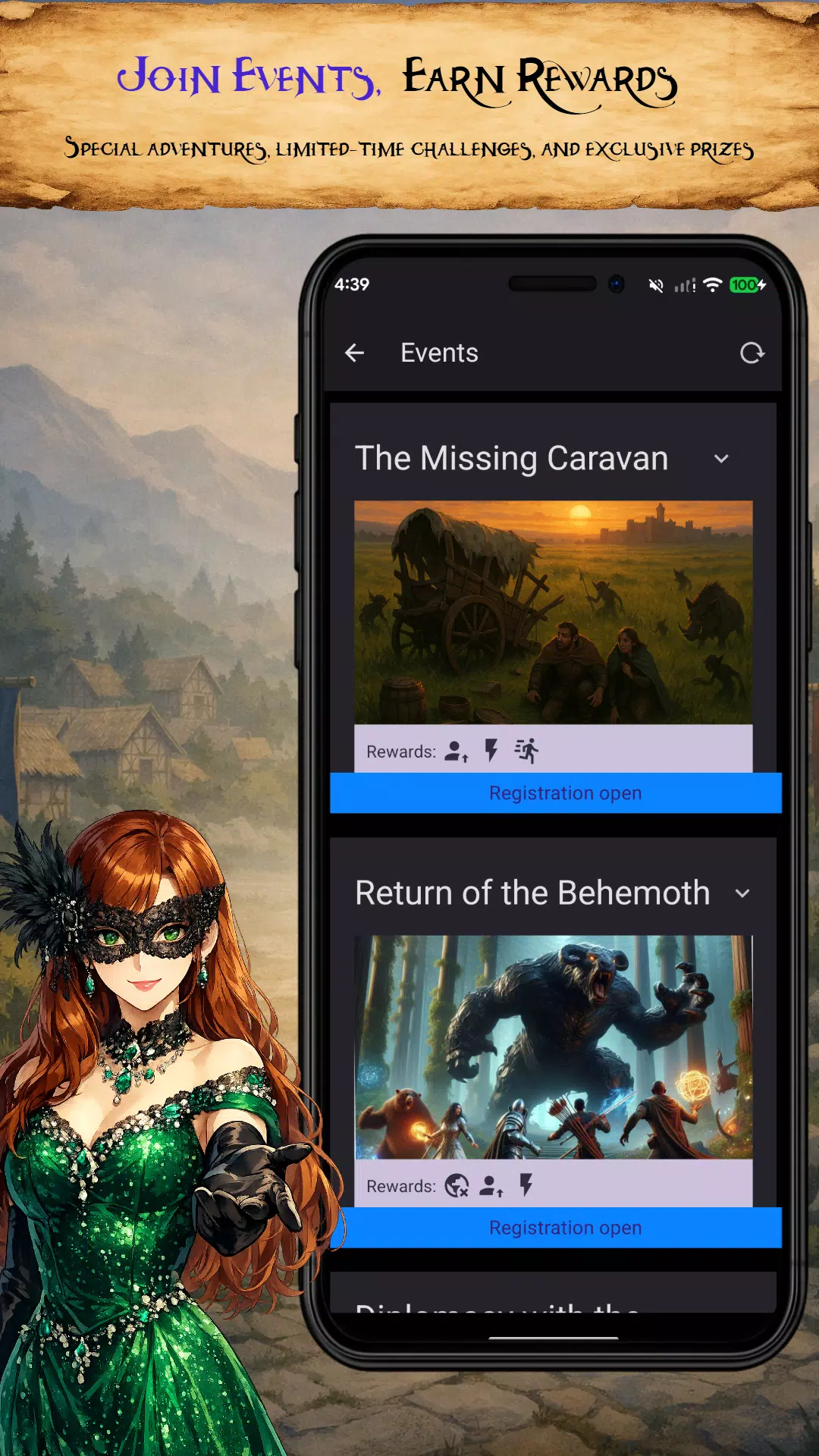
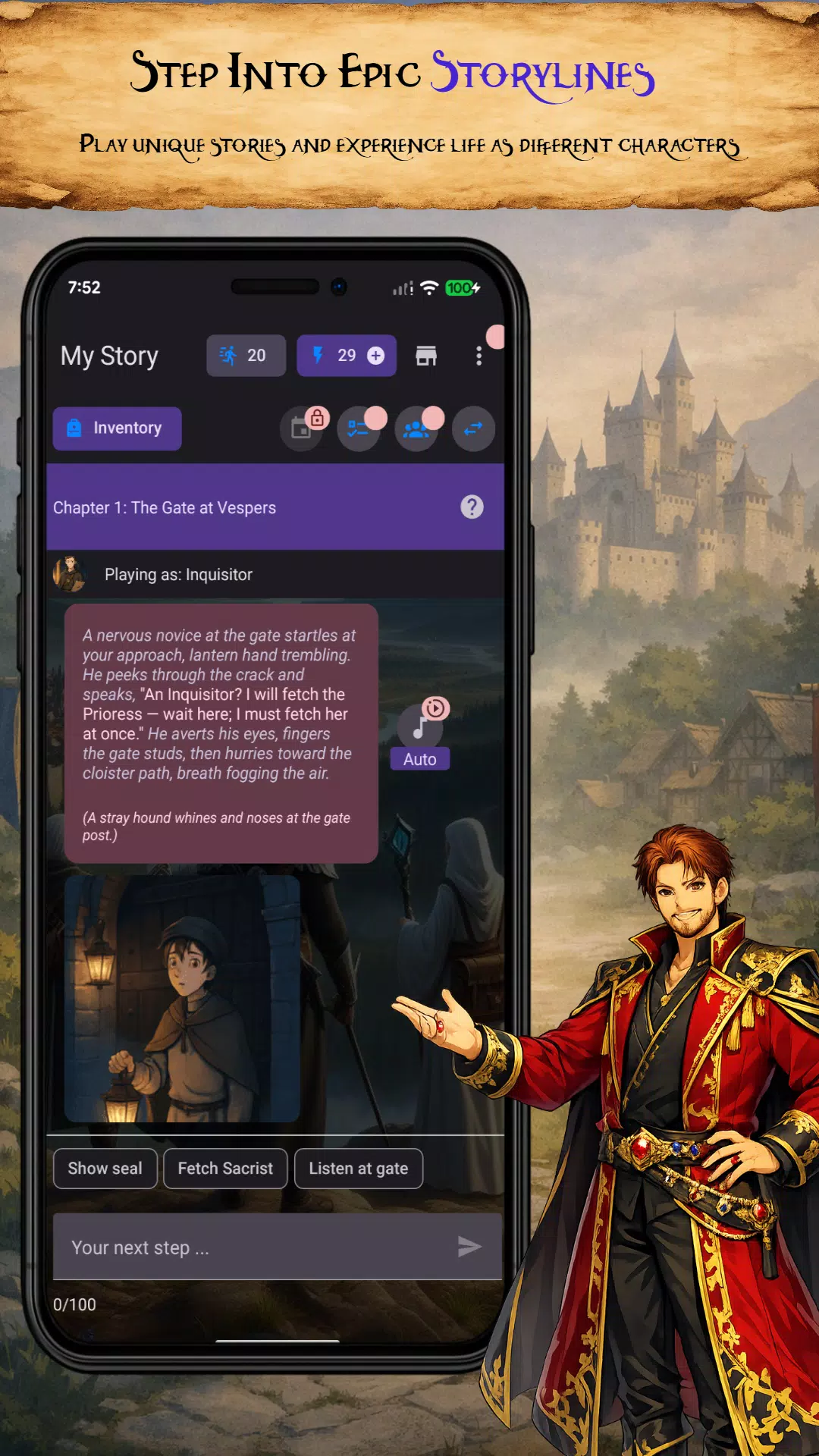
The game emphasizes branching narrative and player agency: choices change relationships, unlock new scenes, and can close off or reveal entire plotlines. Interactive conversation uses context-aware replies so characters react believably to your decisions. AI image generation produces on-the-fly visuals to illustrate locations, creatures, and set pieces and is integrated as an optional enhancement rather than a requirement for play. Tools for crafting adventures let you set scene hooks, define objectives, and save variations of a story idea for later refinement.
Gameplay and Controls
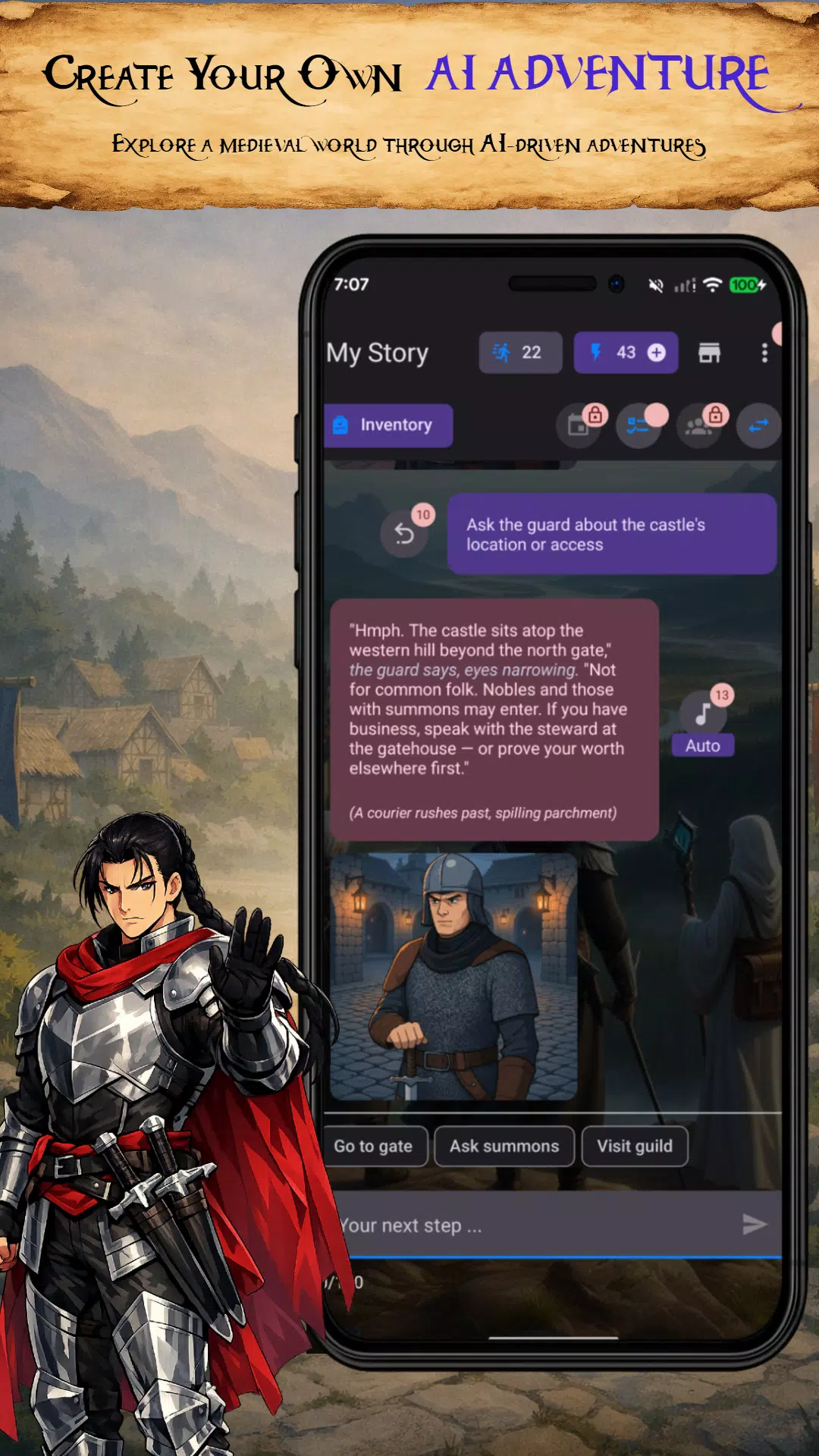
Gameplay centers on narrative decision points and scene management. Most interactions are tap-based: select dialogue options, pick actions, and confirm scene transitions with simple taps. A compact toolbar organizes your current inventory of story seeds and choice flags, while long-press or context menus reveal additional details about characters and past events. Controls are deliberately lightweight so the emphasis stays on reading, choosing, and reacting rather than on complex input sequences. The pacing can be adjusted to speed up text or to slow down for reflective moments.
Progression and Structure
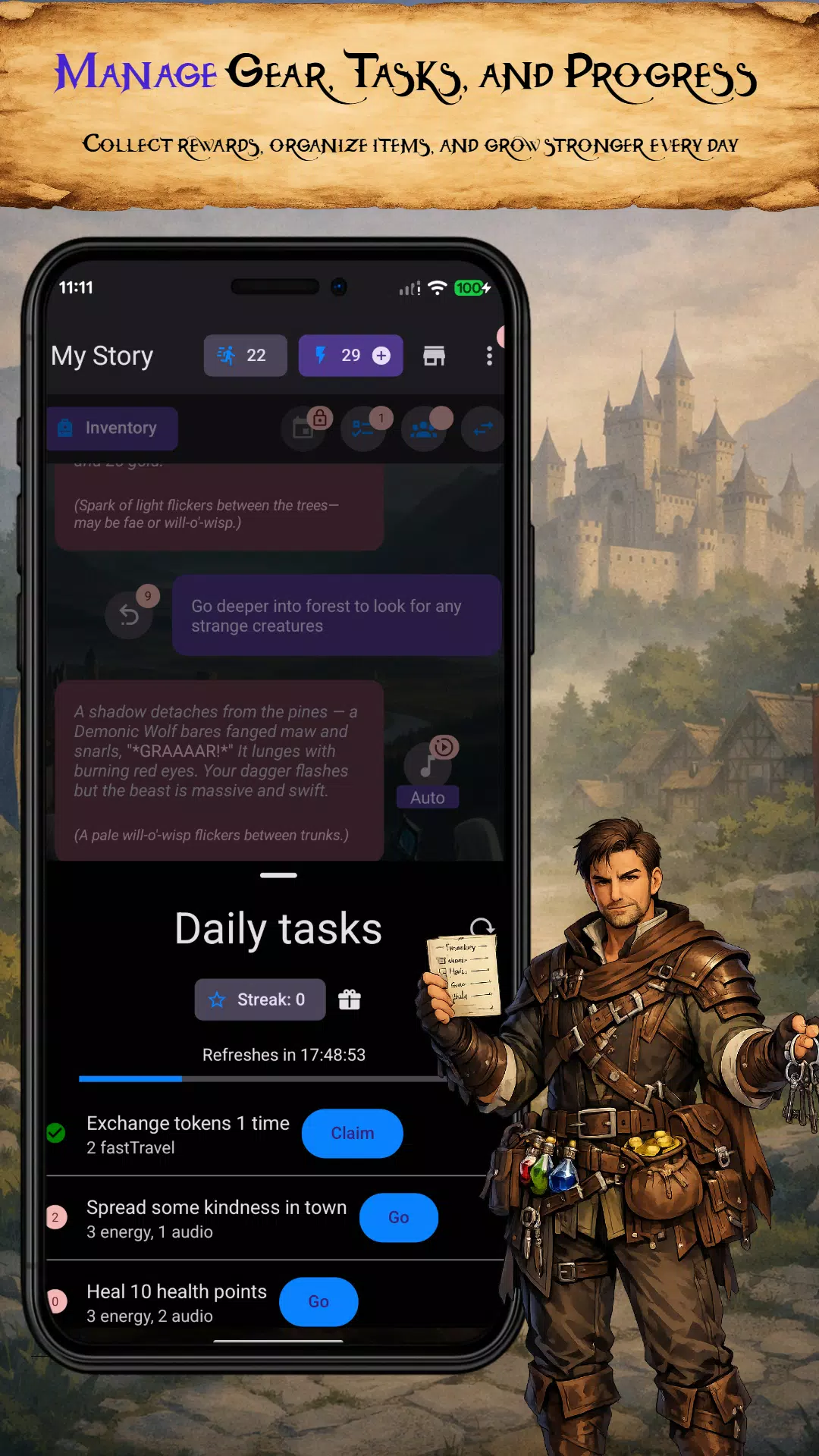
Progression in My Story follows a chapter-and-node model: each chapter contains multiple nodes and branching paths, and decisions determine which nodes activate next. As you advance, you unlock new narrative tools and scene templates that expand the kinds of scenarios you can create. Save slots allow multiple concurrent playthroughs, and an in-game journal records key decisions and visited nodes so you can revisit choices or aim for alternate endings without losing earlier progress. This structure supports both short play sessions and extended campaigns.
Visual Style and AI Imagery
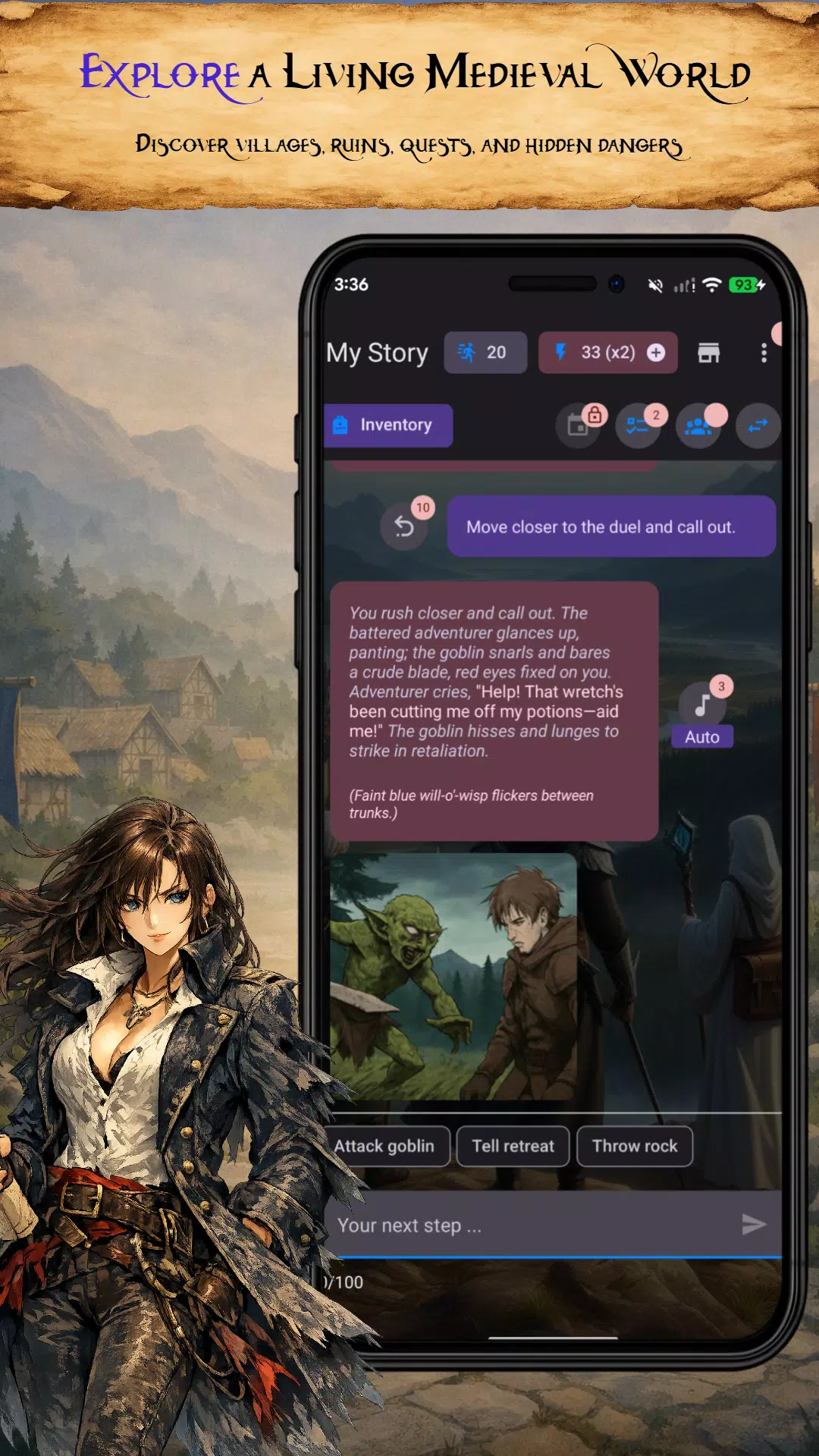
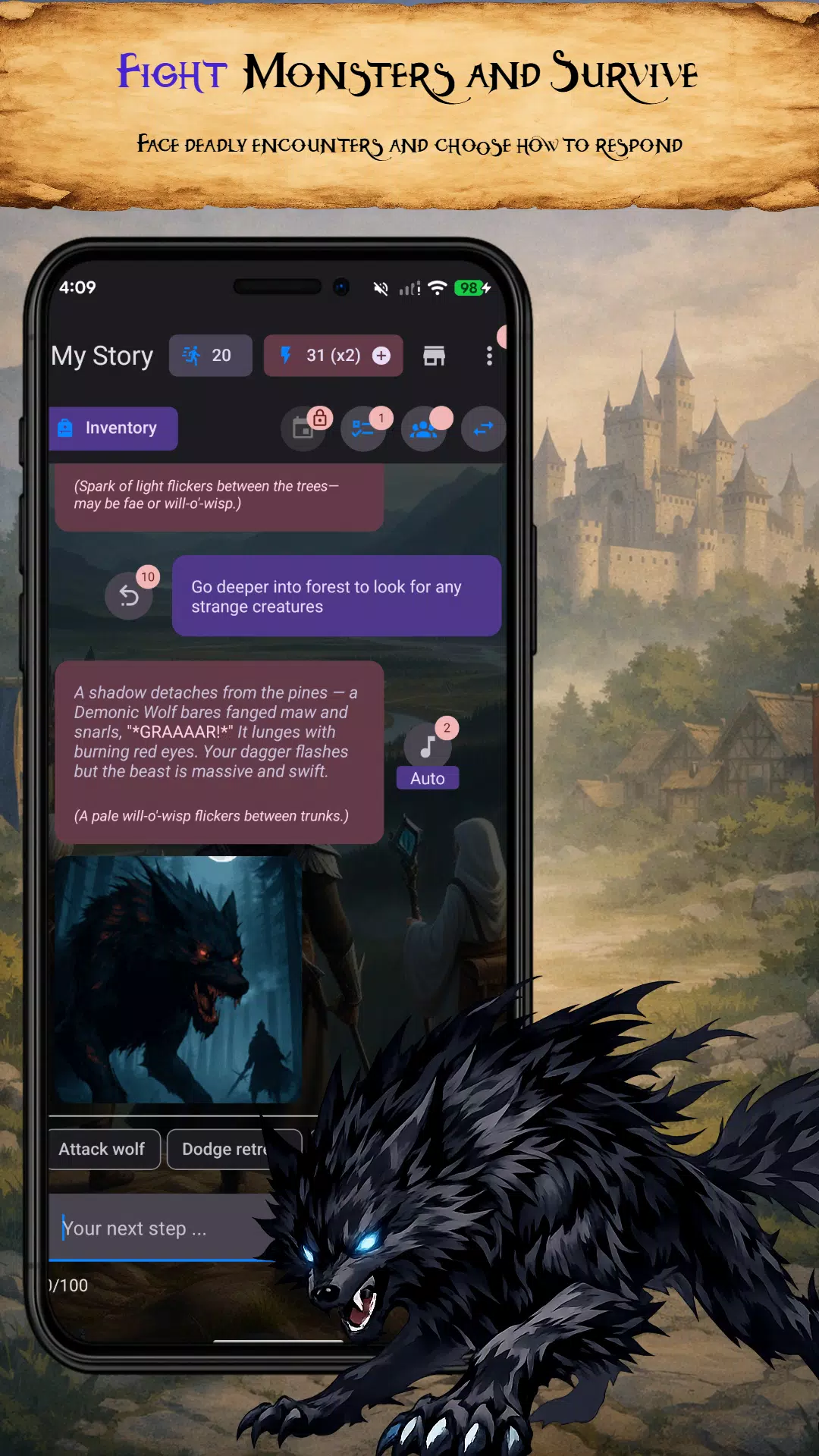
The visual presentation balances readable UI design with atmospheric imagery. Fonts, spacing, and color contrast are chosen to reduce eye strain during long reading sessions. AI-generated images are offered as optional scene illustrations that match the tone and setting you create: sweeping landscapes, ruined architecture, or odd creatures can be rendered to spark imagination. Because AI image generation may require an internet connection and can vary in exact appearance, these visuals are presented as complementary flavor rather than the core experience.
Level Design and Replay Value
Levels are expressed as modular story scenes that can be recombined into many permutations. A single chapter can branch into alternate encounters, secret nodes, or converging paths that bring characters back together under different circumstances. That modular design encourages replay: trying different choices reveals new dialogue, new consequences, and hidden outcomes. The game invites experimentation, and replaying scenarios with different character roles or objectives often uncovers content that is easy to miss in a single run.
Customization and Challenge Systems
Customization focuses on narrative elements and character framing rather than complex equipment trees. Players can name protagonists, set background details, pick archetypes such as explorer or investigator, and choose starting story seeds that influence how characters react. Challenge settings let you tailor difficulty by limiting hints, increasing the consequence of certain choices, or enabling optional modifiers that raise the stakes for a chapter. These options keep the experience flexible for both casual readers and players who want a more demanding narrative puzzle.
Accessibility, Offline Play, and User Experience
Accessibility options include adjustable text size, contrast modes, and a skippable text flow for faster reading. The interface supports screen readers and clear focus indicators for users navigating without precise touch input. Core gameplay — reading, choosing, and navigating saved chapters — works offline once content has been downloaded; AI-generated images and optional cloud-enabled features will request an internet connection when required. Overall, the UX aims for clarity so that players focus on storytelling rather than on managing menus.
How It Feels to Play
Playing My Story is like directing a living novel: small choices can ripple outward, conversations reveal history and motive, and images help set atmosphere when you want them. The combination of branching writing, adaptable controls, and optional imagery creates a creative sandbox where experimentation is rewarded and different playstyles are supported. Whether you enjoy slow, deliberate storytelling or rapid scene-hopping, the app supports multiple approaches while keeping the experience approachable and consistent.
- No virus
- No advertising
- User protection
Information
- File size: 58.20 M
- Language: English
- Latest Version: 1.13.4
- Requirements: Android
- Votes: 496
- Package ID: com.kwerious.mystory
- Developer: Kwerious Inc.
Screenshots
















Explore More
Are you searching for an enjoyable method to strengthen your intellect? Our hottest logical puzzle is tailor-made to offer a stress-free pastime experience. With beautiful graphics and chill background music, you can immerse yourself in an engaging world of logic and critical thinking. Solve increasingly tricky levels at your own pace, with no time pressure or lives system.

Scary Horror 2

Ludo Play Dice Snake Game fun

Annelids

Fake It

Cocogoat? Cocomilk!

Summer Tales
LingoHunt
ULTRAMAN Puzzle Shuwatch!!